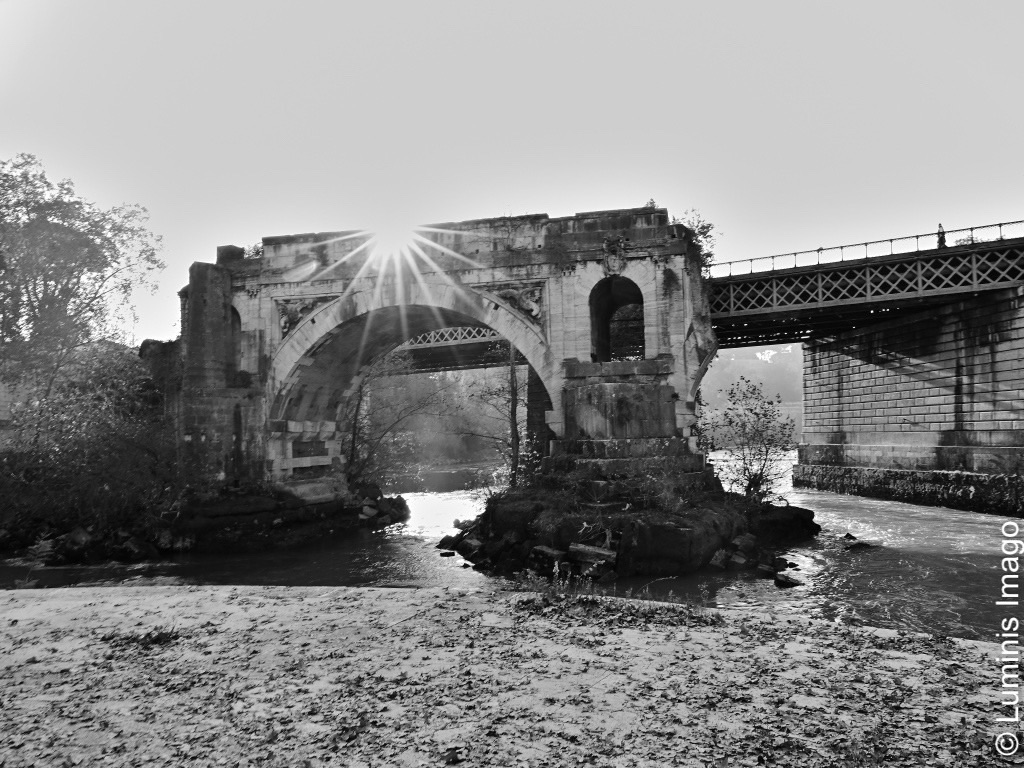
On clear winter mornings, the sun rises over the ruins of the ancient bridge, reminding us that it once connected not just two shores but the two worlds of mortals and gods… more on Luminis Imago

On clear winter mornings, the sun rises over the ruins of the ancient bridge, reminding us that it once connected not just two shores but the two worlds of mortals and gods… more on Luminis Imago

Trajan’s Market was probably built between 100–110 AD as part of the Tarjan’s Forum complex. Thought to be the world’s oldest shopping mall, the arcades in Trajan’s Market are now believed by many to be administrative offices for Emperor Trajan.
Within this single composition lies hundreds of alternate compositions. For the best viewing experience, click to see a high resolution version. Then use your framing square to find your favorite composition.
Cheers,
C. S.

Street vignette along the Via dei Fori Imperiali (Street of Imperial Forums) near the Coliseum in Rome, Italy. For the best viewing experience, click to see a high resolution version.
Cheers,
C. S.
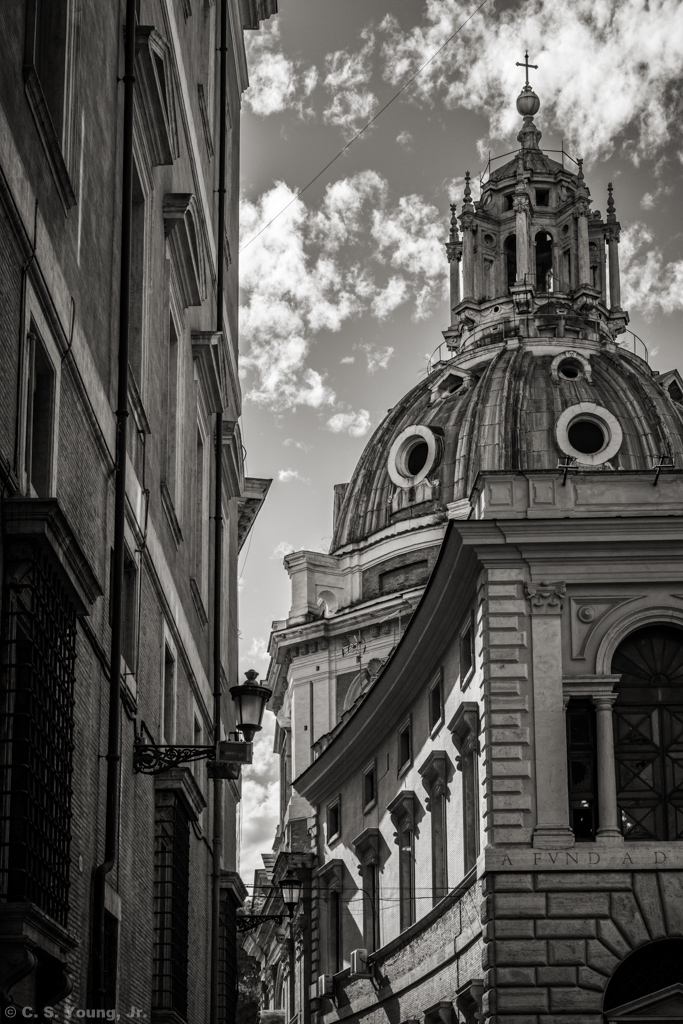
Rear ally view of Santa Maria di Loreto (Saint Mary of Loreto), from Via dei Fornari in Rome, Italy.

Located in the Piazza Venezia or Venice Square in Rome, the Palazzo Venezia building was commissioned by the Venetian Cardinal Pietro Barbo, who later became Pope Paul II. The building was designed by the architect Francesco del Borgo. He started its construction in 1455. At that time Palazzo Venezia served as Embassy of the Republic of Venice, and was used by the Austrian ambassador. The Italian government took over the palace during the First World War. Today Palazzo Venezia is a museum of Medieval and Renaissance art, Museo di Palazzo.
Cheers,
C. S.

Pianist preforming on the Piazza di Spagna (Spanish Square) in Rome, Italy.
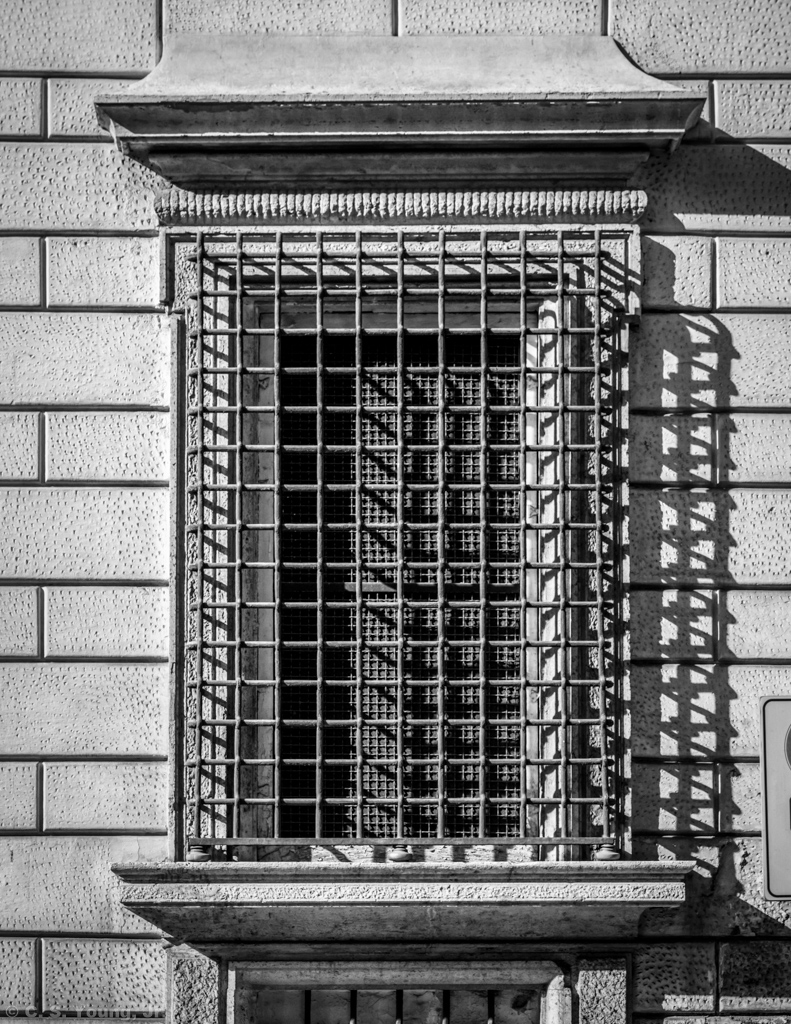
Window abstract from the grand villa with Baroque architecture & a Bernini-designed façade on P.za dei Santi Apostoli, in Rome, Italy.
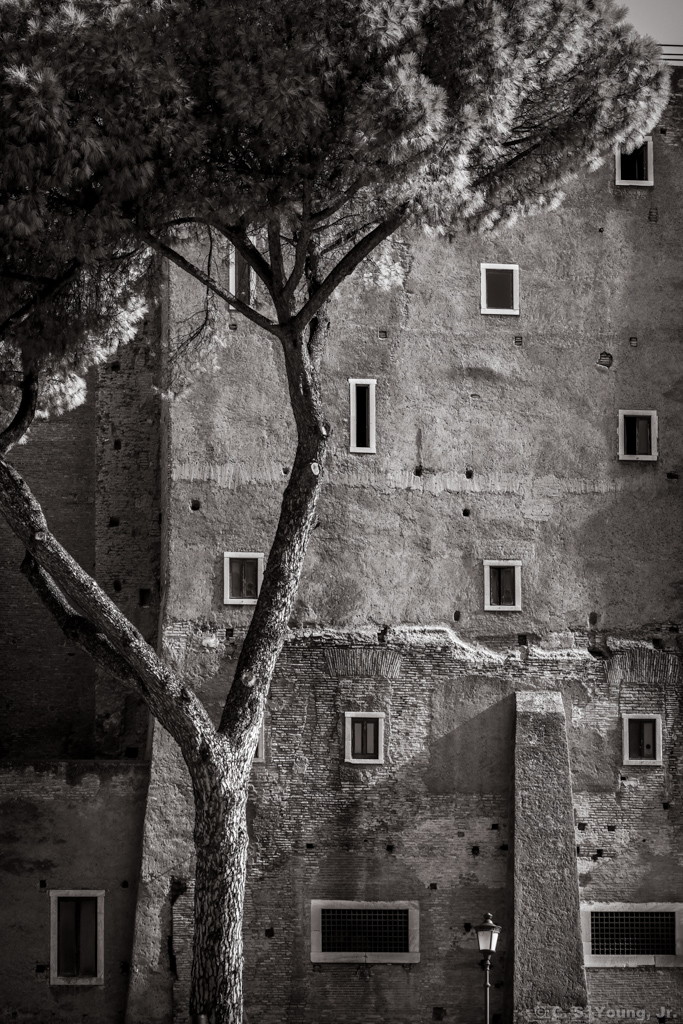
The Torre dei Conti (Tower of the Counts) was built in 1238 by the brother of Pope Innocent III, the Count of Segni, as a fortified residence in Rome, Italy. The tower once stood 60 meters tall, as an impressive medieval landmark. The upper floors were destroyed by a series of earthquakes ending in 1348, it now stands at a height of 30 meters. You walk by the building on Via dei Fori Imperiali (Street of Imperial Forums) near the Coliseum.
Cheers,
C. S.
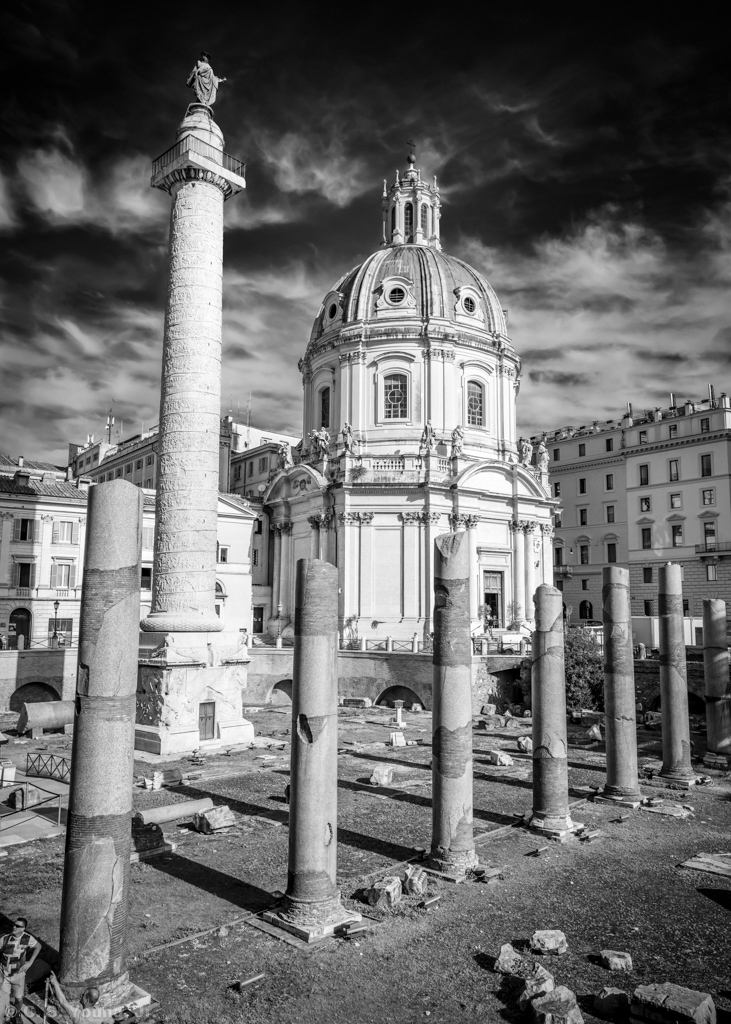
Ruins of the Basilica Ulpia and Trajan’s Column, both part of Foro Traiano (Trajan’s Forum) a Roman square built by Emperor Trajan in the 2nd-century, the column celebrating victory over Dacia (roughly modern day Romania). In the background is Santa Maria di Loreto, a 16th century church with a square first story and an octagonal second story built in travertine and brick.
Cheers,
C. S.

The Palace of Spain or Monaldeschi Palace in Rome is the headquarters of the Embassy of Spain. It is the oldest embassy in world dating back to 1480. It lies on the Piazza di Spagna (Spanish Square) in Rome, Italy.
The scale of the palace door is misleading, I estimate the height to be around 20ft (6m).
Cheers,
C. S.
 Monochromia
You must be logged in to post a comment.