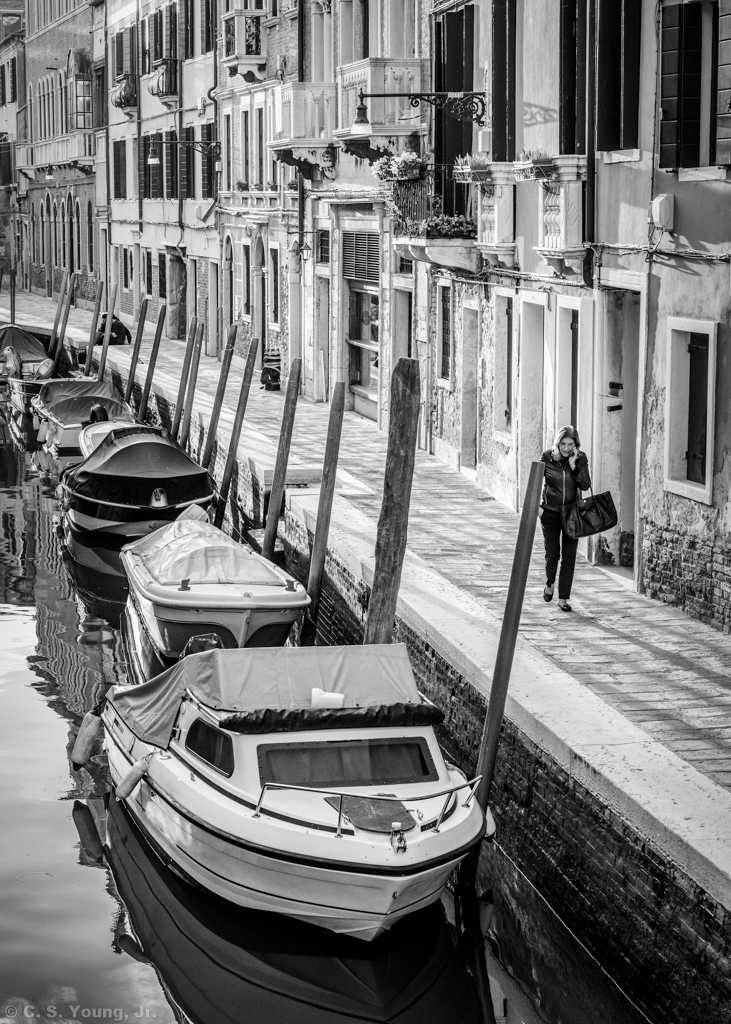
Sunset nears on the Rio de San Barnaba canal in Venice, Italy. See more from my Venice, Italy Gallery.
Cheers,
C. S.

Sunset nears on the Rio de San Barnaba canal in Venice, Italy. See more from my Venice, Italy Gallery.
Cheers,
C. S.
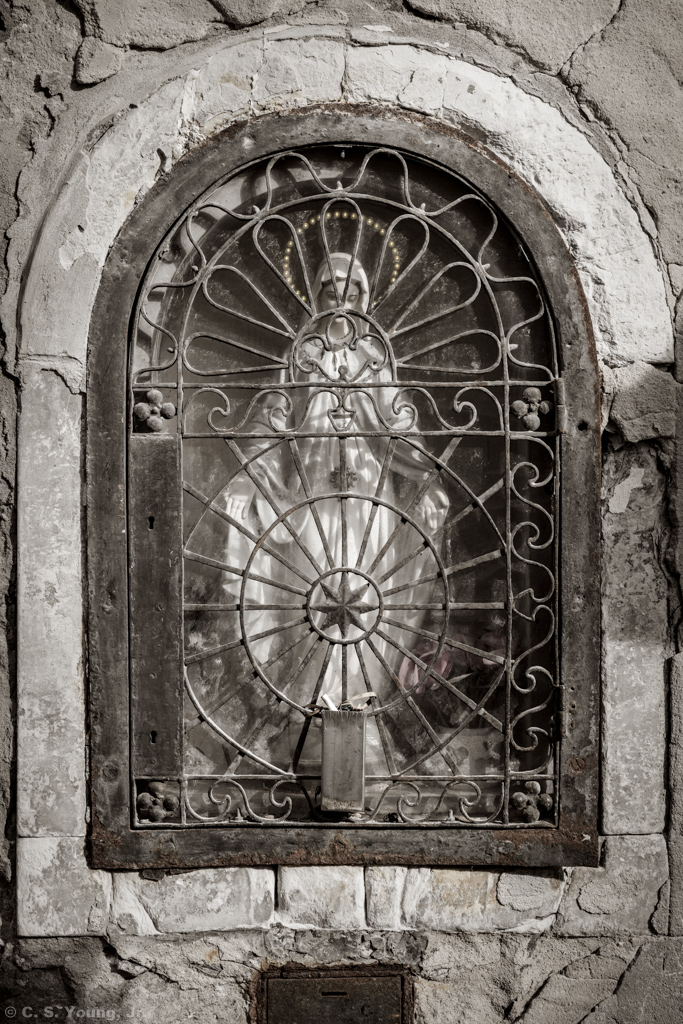
Small roadside shrines are a recurring theme in the Italian cityscape. During my visit to Venice, several of these caught my eye. My research revealed there are hundreds of these Catholic shrines in a wide variety of places and different building materials including wood, metal, plaster, or carved into stone. The shrines are dedicated to the saints, this one to the Our Lady, Star of the Sea.
The Catholic Encyclopedia references the title ‘Mary, Star of the Sea’ originating from St. Jerome’s fifth century translation of Mary’s Hebrew name Miryam, meaning ‘drop of the sea’, into Latin ‘Stilla Maris’ which later became Stella Maris, likely from peasant dialect. Like the North Star, Mary, Star of the Sea provided spiritual comfort to Middle Age sailors during stormy seas.
St. Bernard of Clarvaux so beautifully wrote,
“If the winds of temptation arise; If you are driven upon the rocks of tribulation look to the star, call on Mary; If you are tossed upon the waves of pride, of ambition, of envy, of rivalry, look to the star, call on Mary. Should anger, or avarice, or fleshly desire violently assail the frail vessel of your soul, look at the star, call upon Mary.”
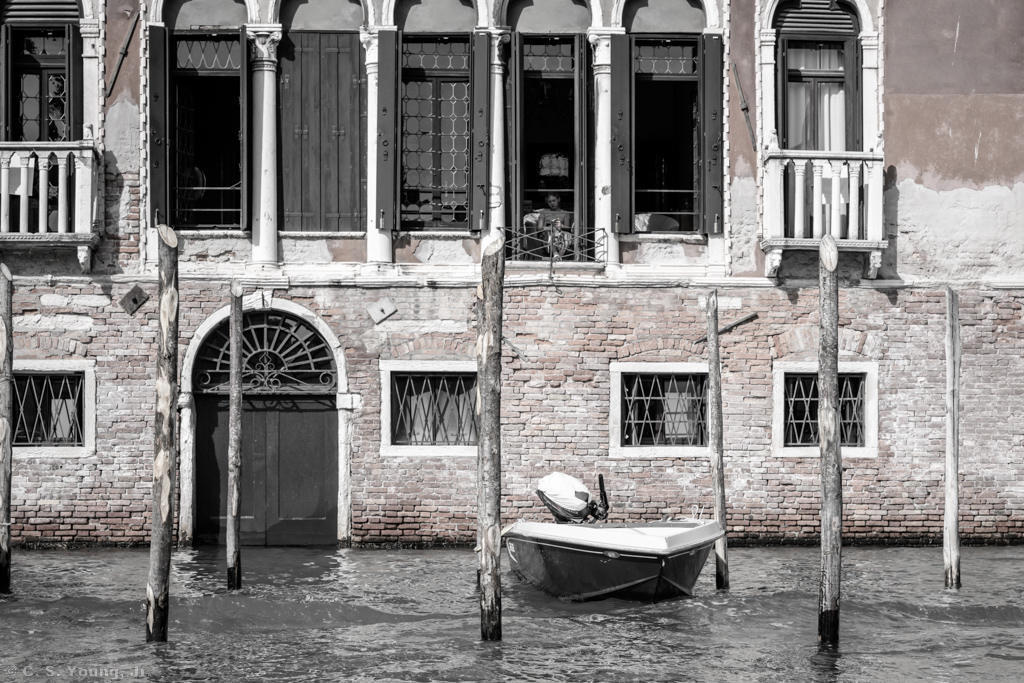
This composition illustrates how sea level rise has taken over many first floor structures in Venice, Italy. Like my previous post, there are many sub-composition opportunities within this image. For the best viewing experience click to view a high resolution version.
Cheers,
C. S.
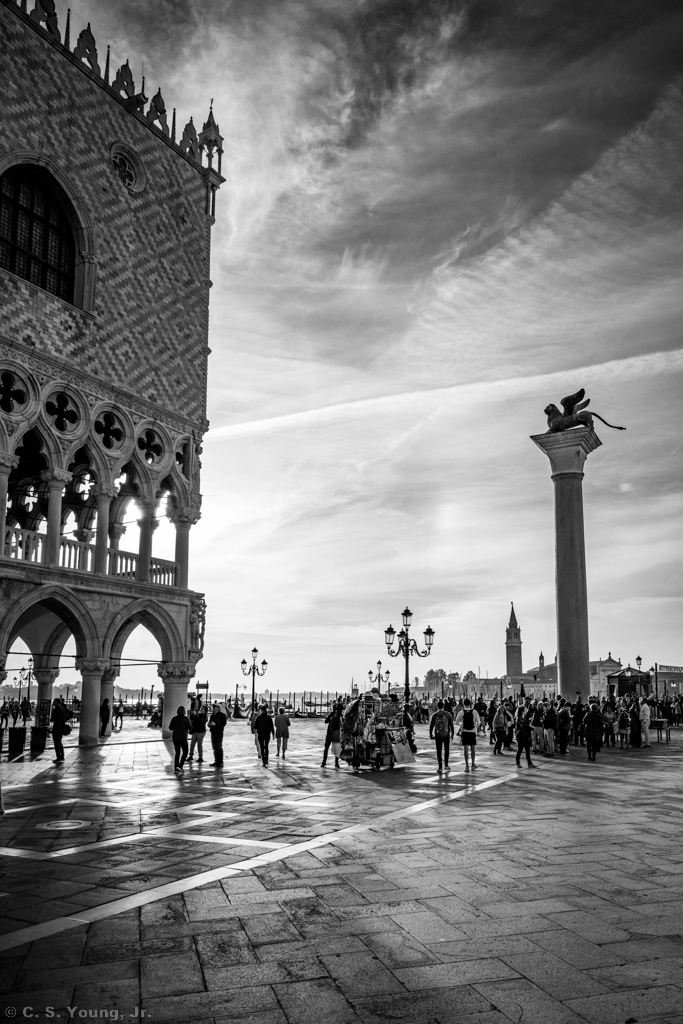
Early morning view of Piazzetta San Marco (little St. Mark’s Square), Doge’s Palace, and Colonna di San Marco in Venice, Italy.
Cheers,
C. S.
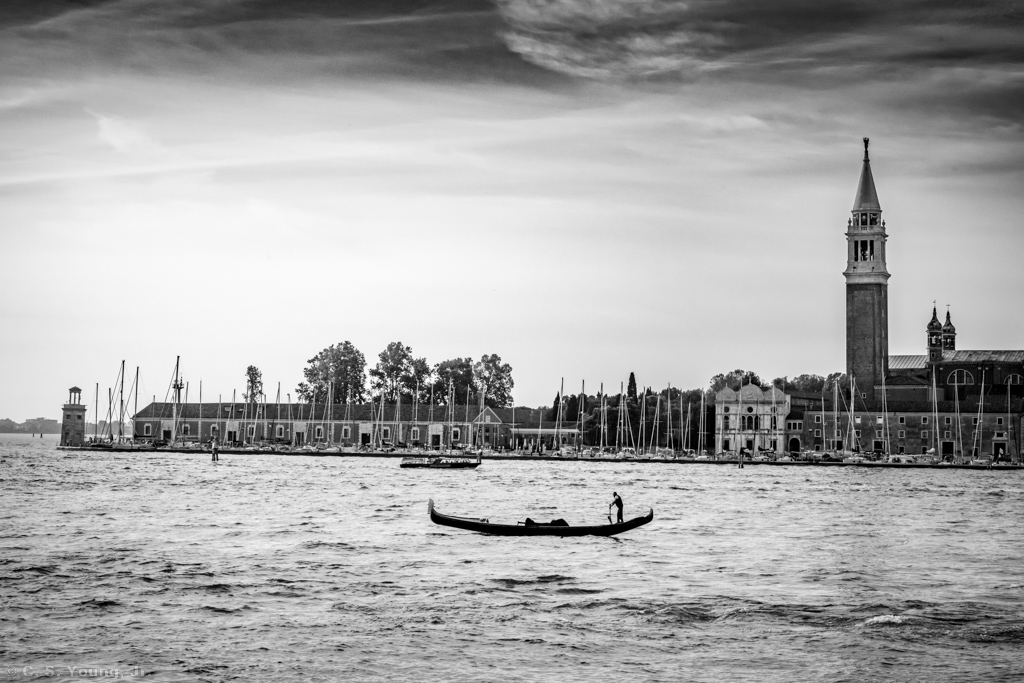
Looking across the San Marco Basin in Venice from the Riva degli Schiavoni waterfront towards the Church of San Giorgio Maggiore and yacht harbor.
Cheer,
C. S.
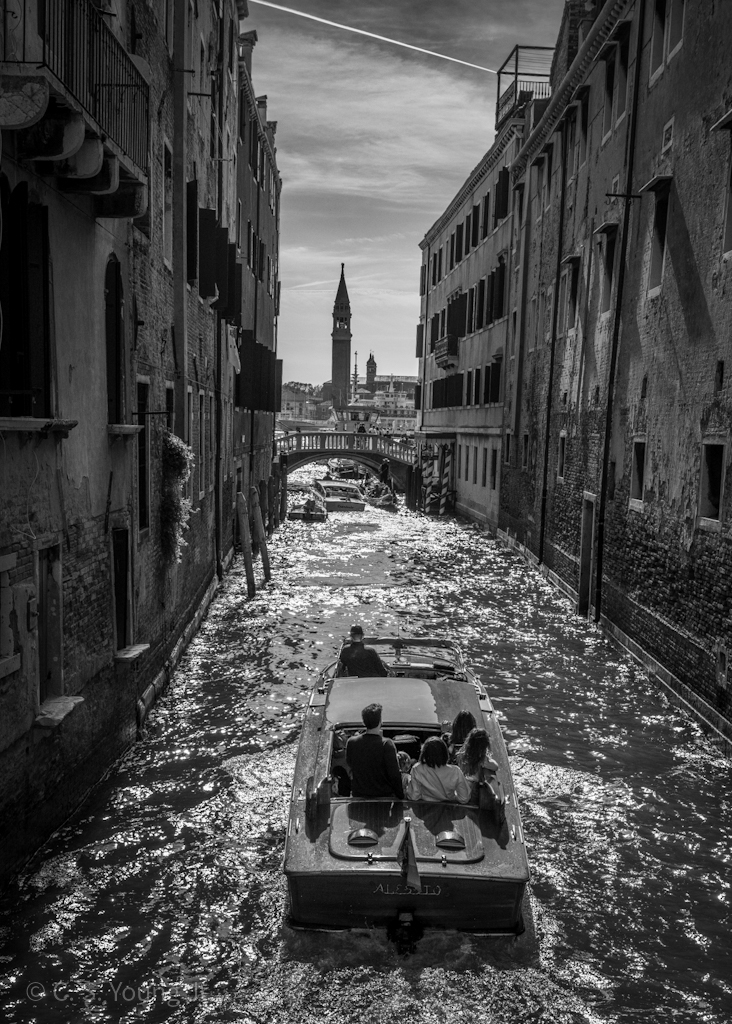
In the San Marco neighborhood (sestieri) of Venice, the southern Rio de la Pleta Canal provides water taxi riders a line-of-sight view of the Church of San Giorgio Maggiore.
Cheers,
C. S.
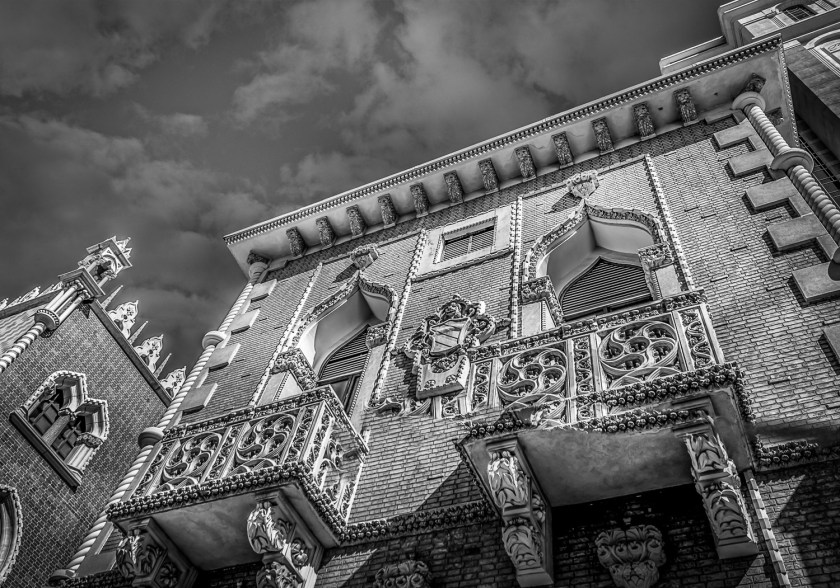
Please click on the image above to see a high res version
Whenever I had a paper due in school I would plagiarize from the World Book Encyclopedia. Not much has changed except Wikipedia has replace the World Book. So let me just dive in as if I actually know what I’m talking about.
Venetian Gothic is a term given to an architectural style that originated in 14th century Venice with the confluence (I would have substituted a plain, ordinary, everyday word here because no one I know talks like that. Confluence? What the…?) of Byzantine styles from Constantinople, Arab, and early Gothic forms from mainland Italy. The most iconic Venetian Gothic structure, the Doge’s Palace, includes traits of Gothic, Moorish, and Renaissance architectural styles.
None of the above has anything to do with the image above, as the image above is a photo taken a few weeks ago in Las Vegas, Nevada, USA. The new world! We in the new world have a habit of duplicating and replicating and basically just plagiarizing every other culture in the world. But it’s not our fault. See, as a nation, we are made up of a lot of different ethnic type people from every other culture in the world. So it’s understandable! At least to me.
Maybe I should run for congress.
While I decide what my platform will be, please visit Photos By Emilio. We have images in every color to suit every mood!
 Monochromia
You must be logged in to post a comment.