
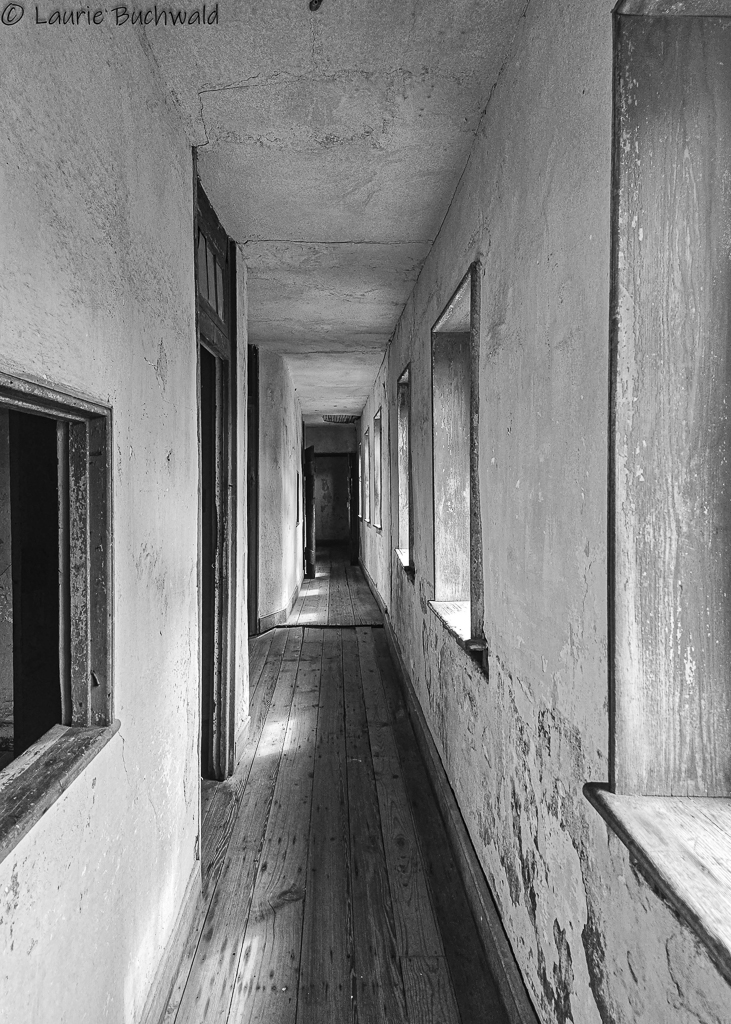
While visiting family in Charleston, SC, we toured the Aiken-Rhett Museum. The house and its surviving furnishings offer a compelling portrait of urban life in antebellum Charleston. Purchased by the Historic Charleston Foundation in 1975, the house is being “preserved as found” and represents a stark example of the wealthy vs the urban enslaved, c 1820s.
I’ll be sharing more from this tour as the weeks go on, but for now this hallway connected the quarters of the enslaved as well as the kitchen and laundry.
Of course I forgot my camera, so all photos from the Aiken-Rhett Museum are from my Samsung Galaxy.
 Monochromia
I love the depth of this photograph, the perspective, and the textures of the walls and floor. Great shot! 👏👏👏
LikeLike
Thank you, Charly. I very much regretted not having my camera, but the cell phone did okay!
LikeLike
Very interesting, thanks for sharing! I can’t wait to see the next photos of your tour. 👍
LikeLike
Thank you, and know that I am pleased that you want to learn more. We need to somehow learn from history
LikeLiked by 1 person
I think it’s great that places like this are “preserved as found” by historic foundations Laurie. People can tour these places and see how wrong things were in previous years. Your image is a perfect “record” photo that documents the textures, peeling plaster, uneven floorboards and general depressing feeling you must have gotten in your stomach while walking through these halls. Superb work 😊
LikeLike
Thanks, Joe – your words are perfectly true. I have plans to do a post on Life on the Bike but need to squeeze in some time. I guess it’s indoctrination but to think that the slave owners never thought wrong about what they were doing …. apalling!
LikeLiked by 1 person