Echoes in Bronze

Alakajay, Black And White Photography, Photography

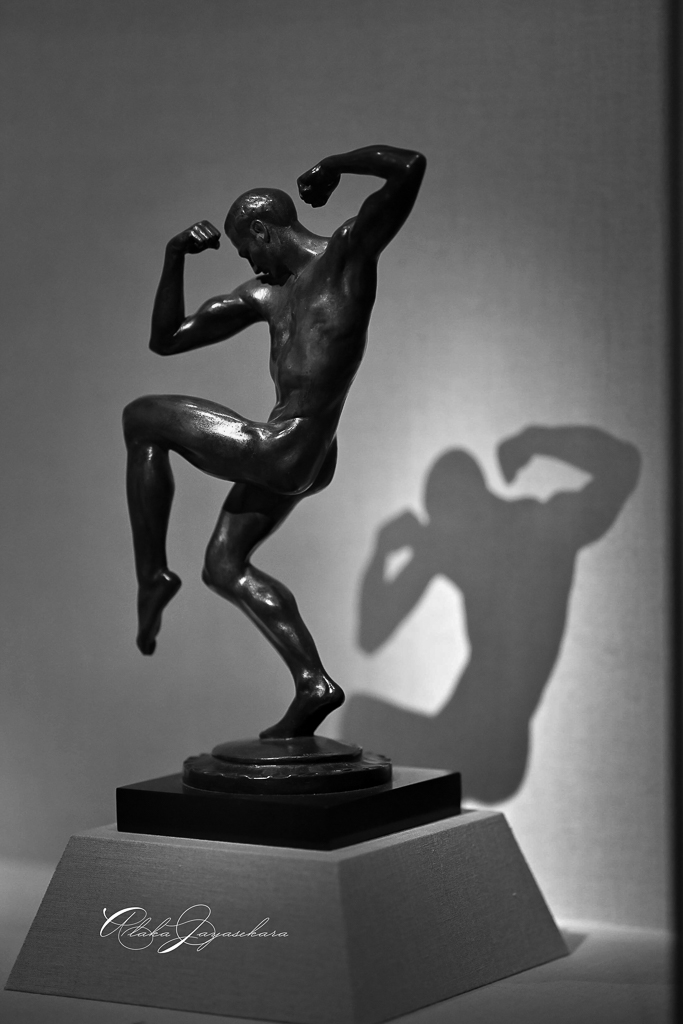
National Gallery of Art – Washington, D.C. The Acrobat (c. 1928) by Gaston Lachaise
The Acrobat captures the human form in a moment of pure athletic energy, balance, and rhythm. Frozen mid-motion, the bronze figure flexes with dynamic grace, while a sharp gallery spotlight casts a dramatic shadow against the wall – amplifying the sculpture’s expressive contours into a timeless study of light, form, and silhouette.

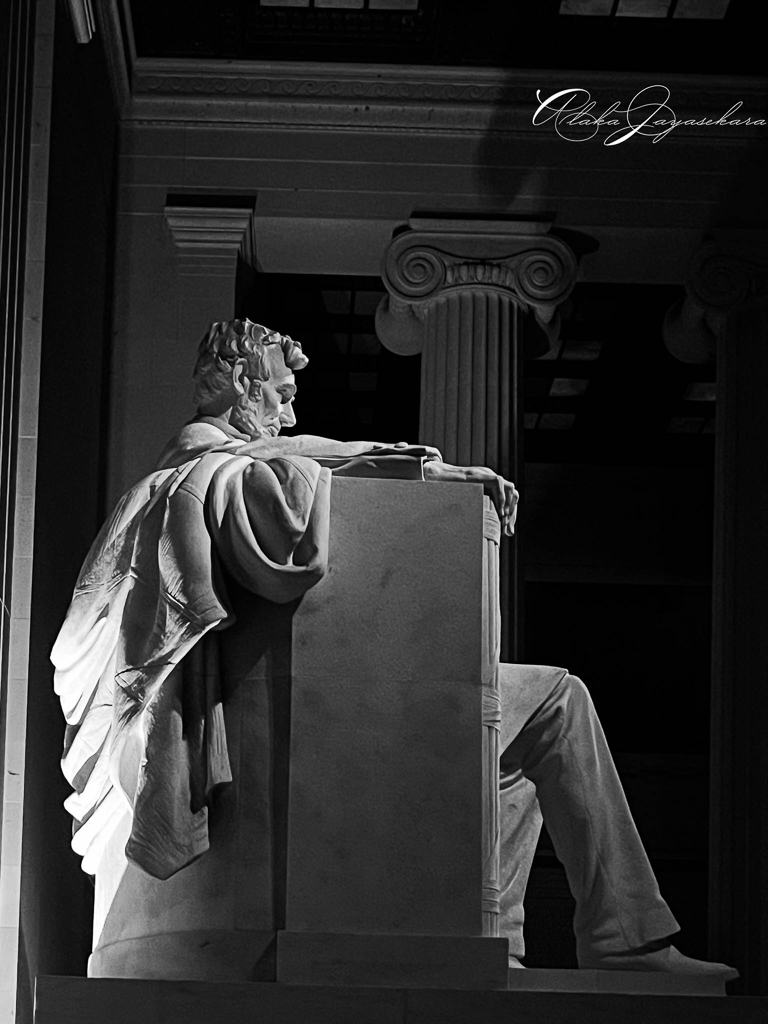
“Gloria Victis” National Gallery of Art – Washington D.C. 

Alakajay, Black And White Photography, Photography


Antonin Mercié’s masterful Gloria Victis (“Glory to the Vanquished”) stands as a powerful tribute to resilience in defeat. Created after the Franco-Prussian War, it subverts traditional heroic imagery by depicting a winged allegory of Fame lifting a dying soldier, who holds his broken sword high in defiance. The dynamic, upward-sweeping composition captures a brilliant interplay of vulnerability and strength, immortalizing the courage of the fallen and proving that true glory is never lost.

Out, Damnet Spot

Alakajay, Black And White Photography, Photography

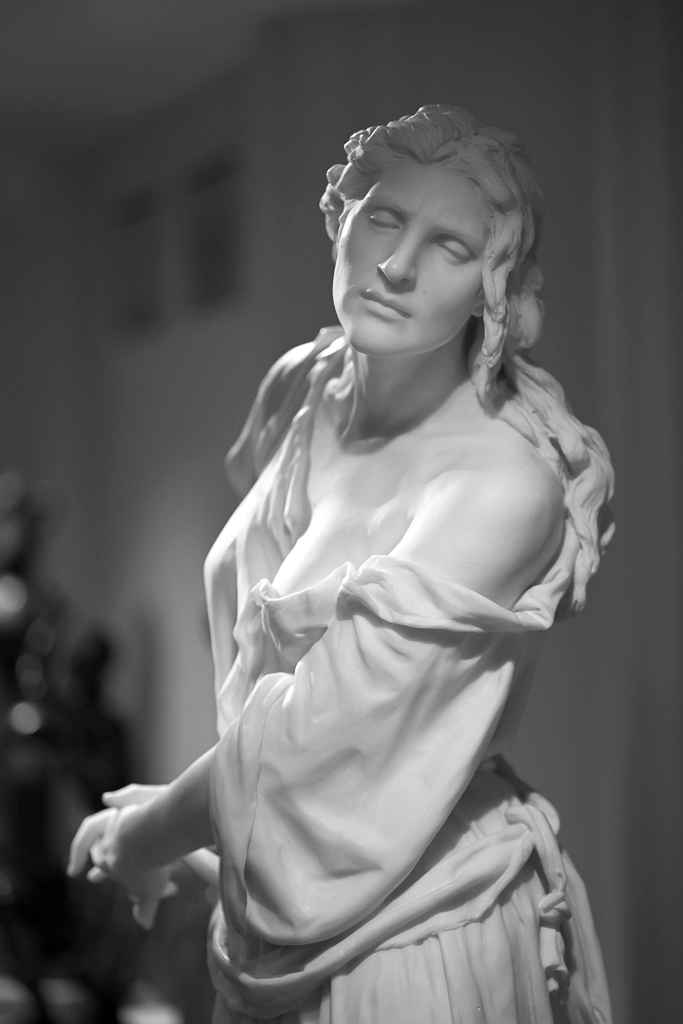
Smithsonian American Art Museum in Washington, D.C..

She walks with her eyes closed, her hand reaching for something no one else can see. This is Lady Macbeth in her final unraveling – the sleepwalking scene from Act V, captured in white marble by German-American sculptor Elisabet Ney in 1905, just two years before her own death.

Ney gave her not madness but something quieter and more terrible: a woman entirely alone inside her own mind, still trying to clean what cannot be cleaned.