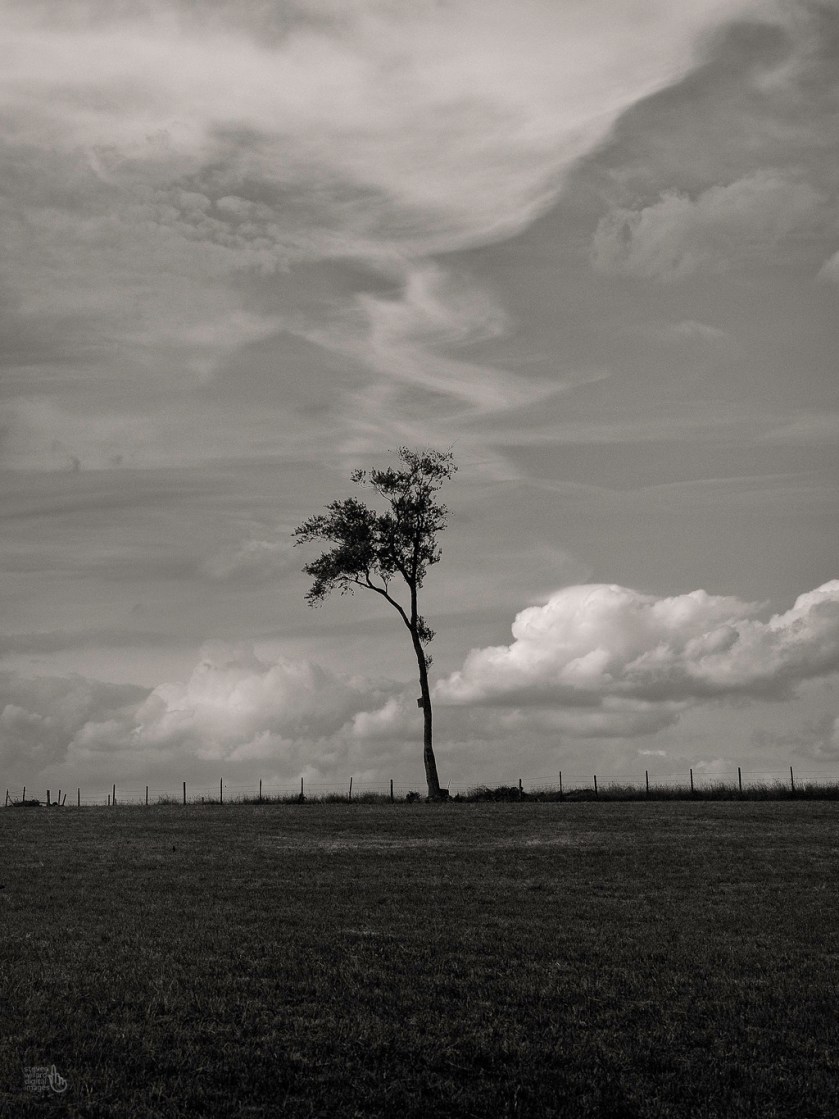
Last One Standing

Black And White Photography, Photography, Steven
Last One Standing, Roxbury, CT © Steven Willard

Last One Standing, Roxbury, CT © Steven Willard

I’m not quite sure why I find lone trees so interesting. Is it somehow symbolic of the lone individual? Do I imagine Gary Cooper in “High Noon”, standing alone against the gang of outlaws? Or maybe Alan Ladd in “Shane”? I give away my age when I reference these two classic movies, but isn’t there something heroic in human lore about the rugged individual standing alone against the world? All I know is that whenever I see one of these old, gnarly trees that show the evidence of hardships, I feel strangely proud of them, and sad at the same time.

I learned from friends that this tree was finally felled by a storm. I drove back up to see for myself, and there standing by the side of the road, I wept.

Pentax K5IIs with 70mm f2.4 lens, processed in Photoshop CS4 and Nik Silver Efex Pro 2.

Please visit my blog at, http://www.stevenwillardimages.wordpress.com.
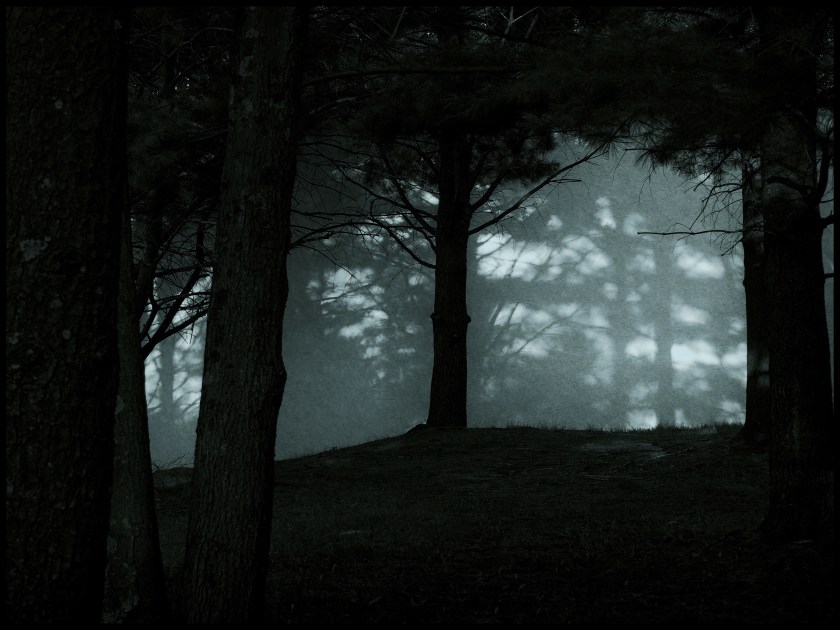
Moonlight Through The Pines

Black And White Photography, Photography, Steven
Moonlight through the pines, Woodbury, CT © Steven Willard

Moonlight through the pines, Woodbury, CT © Steven Willard

I don’t know how many people today remember Hoagy Carmichael, and yet whenever I come across a scene like this I am immediately reminded of his songs. Though he did not write the lyrics (those were by Stuart Gorrell), that line, “Georgia on my mind“, or the line “moonlight through the pines“, it’s Hoagy’s melody that echoes in my head.

If you have seen, and can remember the movie, “To Have, and Have Not”, the movie where Humphrey Bogart meets Lauren Bacall (all you have to do is whistle), you might also remember Hoagy as the cigarette smoking piano player. Maybe too, you will remember that Hoagy composed one of the most recorded songs of the 20th century. According to Wikipedia, “Stardust” has been recorded more that 1,500 times.

Odd how a stroll in the moonlight can have that effect on me.

Olympus OMD EM5 with 20mm f1.7 lens.

Please visit my blog at http://www.stevenwillardimages.wordpress.com.
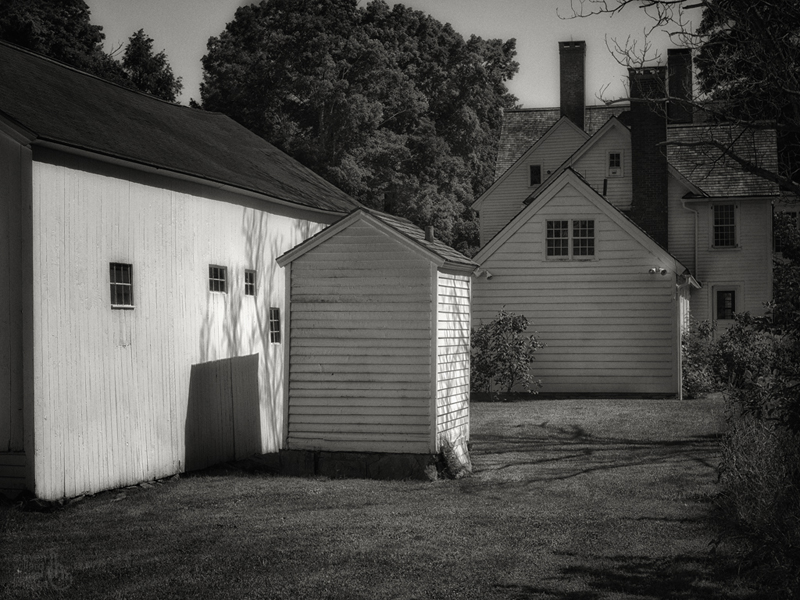
The Back of the House

Black And White Photography, Photography, Steven
The back of the house, Bethlehem, Connecticut © Steven Willard

The back of the house, Bethlehem, Connecticut © Steven Willard

It must be the contrarian in me, but I found the back of the Bellamy-Ferriday House to be more interesting than the formal front that normally gets more attention. The front is where “company” would have been shown into the house; the work is done ’round back. Besides, at this time of day the light was much more interesting.

Of course this doesn’t mean that I might not photograph the front some other time; I’m leaving my options open. I think this would be good advice if I was in the advice business or if anyone ever asked me. “Don’t just look at the front, explore and keep your options open”. Not that anyone asked me.

The Bellamy-Ferriday House and Gardens is open to the public for a nominal fee and is located at 9 Main Street North, Bethlehem, CT 0675.

Please visit me here for more images of Northwest Connecticut.

Curves

Black And White Photography, Photography, Steven
Curves

Curves, Roxbury, Connecticut © Steven Willard

Curves

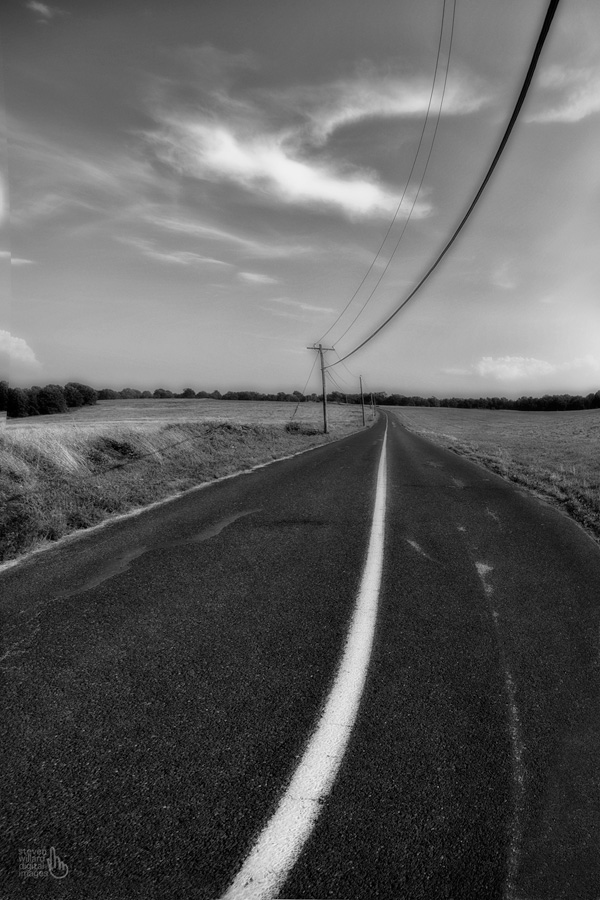
drooping catenary wires

hang belly down

in sympathetic curves

over an empty country road

SJW

Pentax K5IIs with 15mm f4 lens.

Please visit my blog at https://stevenwillardimages.wordpress.com for more images of Northwest Connecticut.

Before

Black And White Photography, Photography, Steven
Staten Island Ferry, New York © Steven Willard

Staten Island Ferry, New York © Steven Willard

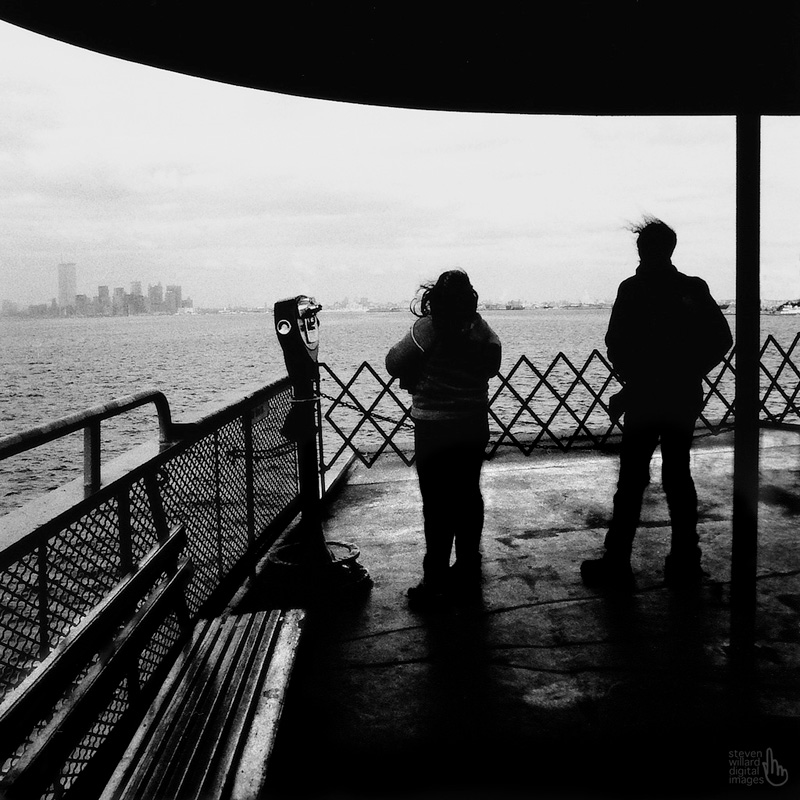
It was years before I moved to Connecticut, 1971 in fact. Here I was on my first trip to New York City and there were so many things I wanted to see and do, I hardly knew where to begin. But I knew that one of the things I wanted was to take the Staten Island Ferry, just to say I’d done it. I also thought it would be a great way to get a full view of lower Manhattan Island. It was a blustery day, with a low-hanging overcast, but in the distance I could easily make out the World Trade Towers that are just visible in the upper left of the photograph. This was long before the tragedy of 9/11, and before we lost the feeling that our country was indestructible. It will be a long, long time before we will feel that way again.

Pentax Spotmatic with 50mm lens and Tri-X. Scanned from a gelatin print and adjusted with curves in Photoshop CS4 to better match the original print.

Please visit my blog at https://stevenwillardimages.wordpress.com for more images and notes.

Porch Rail

Black And White Photography, Photography, Steven
Porch Rail, Washington Depot, Connecticut © Steven Willard

Porch Rail, Washington Depot, Connecticut © Steven Willard

The decision to make a photograph is an interesting proposition. What is it that catches our eye and convinces us that we’ve seen something that is worthy of a photograph? And why would we think anyone else will be interested, and should that matter to us? Do we really make photographs for others, or are we simply trying to satisfy our own needs?

I honestly don’t have answers to these questions, but they are questions that I find myself wondering about more and more. I think it is something most photographers go through as they gain years and experience. As a newcomer to photography we start out struggling to learn the craft well enough that we can make images that are in concert with our vision; it’s all about learning how to use the gear. We waste time, and money, looking for short cuts. We buy more gear thinking that better cameras and more lenses will magically make our photographs better when in fact it’s hard to find a really bad camera these days. Sure, if your interest is specialized, like wildlife, you may find yourself in search of longer and longer lenses that focus quicker, but most of us just don’t utilize the gear we have to its potential.

Most of us who keep photographing eventually realize that the gear isn’t the answer to making better images. The search becomes about what does, and that’s what keeps me interested in the art of photography. It’s a game you can play the rest of your life. Once you learn the rudiments of the game you realize its not about the equipment anymore than golf is about the clubs or fishing is about the rod and reel, or even about the fish; its about the quest. It’s about learning; what makes a good image, and how you convey your vision to others. Its about opening your mind as well as your eyes.

Pentax K5IIs with 70mm lens processed with Photoshop CS4 and Nik Silver Efex Pro 2.

Stone Drain

Black And White Photography, Photography, Steven
Stone Drain, Brookfield, CT © Steven Willard

Stone Drain, Brookfield, CT © Steven Willard

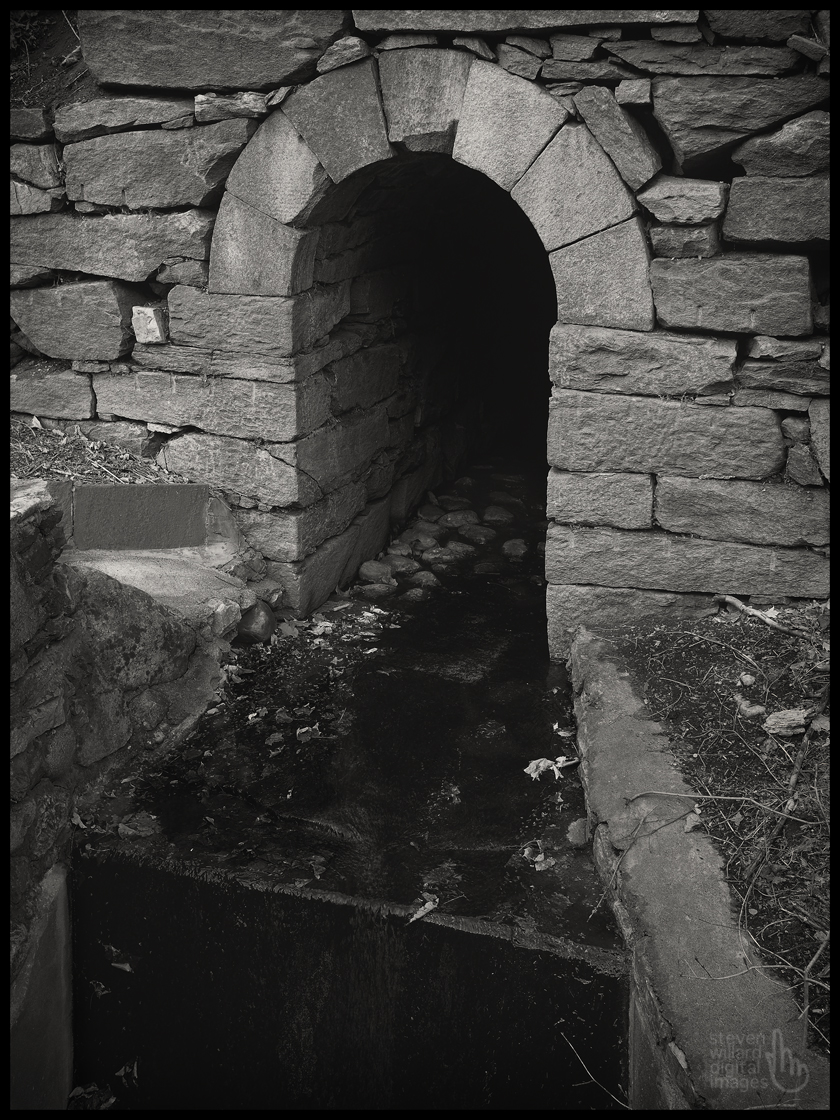
Looking around near where I live I often stumble across places where there is evidence of different eras. This drain, or culvert, was clearly constructed well before the road that passes over it was paved. No contractor today would use such materials; much too costly.

Olympus Omd EM5 with 20mm f1.7 lens, converted to B&W in Nik Silver Efex Pro 2.

Meat Market by Moonlight

Black And White Photography, Photography, Steven
Meat Market by Moonlight, Steven Willard

Meat Market by Moonlight, Steven Willard

The hills of northwest Connecticut were blanketed in a fresh snow. The winds had stilled, the clouds had lifted, and a full moon lit the countryside.

Pentax K10D with kit zoom.

Guest Post – Steven Willard

Black And White Photography, Photography, Steven

This week I would like to introduce a local photographer from Connecticut and the newest member of our team Steven Willard. I have been following him for quite some time now and I hope you take the time to visit his site.

From 133 bridge_Pano

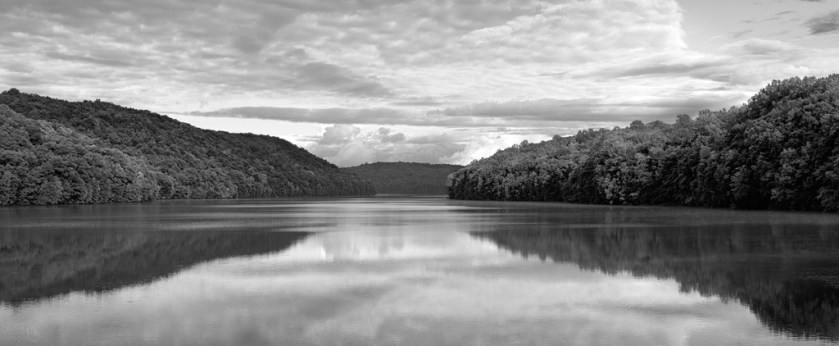
View from 133 bridge, Bridgewater, Connecticut. Pentax K10D with kit zoom, four exposure stitch using PS CS4 converted to B&W in Silver Efex Pro 2.

My name is Steven Willard and I have pursued black and white photography since I first picked up my dad’s Leica in 1955. At the time it was really the only viable route to processing one’s own work, color was far too costly for a youngster, and black and white was really the de facto language of most photographers then. So, like many, I concentrated on learning the craft as it was taught by Adams, White and Zakia and would have been satisfied with that. Then came digital, and everything changed, or so I thought.

I finally bought my first digital camera (and computer and printer) and set about in learning a new language, or maybe grammar is more accurate. It was hard. I had a lot to learn and had no teacher to teach me about Photoshop, as everyone seemed to have gotten so far ahead of me and I didn’t know enough to ask proper questions let alone understand the answers. But an interesting thing happened. As I struggled to learn the new vocabulary of digital, I discovered that the message was still the same; see the subject for what it is, and as Minor White said “see it for what else it is”. That has been my goal.

To see more of my images please visit – My site