 St. Marys
St. Marys was built in the 14th century and is now redundant. It was witness to the Battle of Towton where 28,000 were slaughtered in a blizzard on Palm Sunday 1461. Many of the Commanders will have taken prayers here prior to the battle.
 St. Marys
St. Marys was built in the 14th century and is now redundant. It was witness to the Battle of Towton where 28,000 were slaughtered in a blizzard on Palm Sunday 1461. Many of the Commanders will have taken prayers here prior to the battle.
 This statue is made out of 100,000 confiscated blades from over 43 Police forces in the U.K.
Created by sculptor Alfie Bradley and the British Ironwork Centre in 2018, it took 2 years to complete and tours various venues across the U.K. The tour aims to educate the youth about the dangers of knife crime and stands as a memorial to those who have lost their lives to violent actions associated with knife crime.
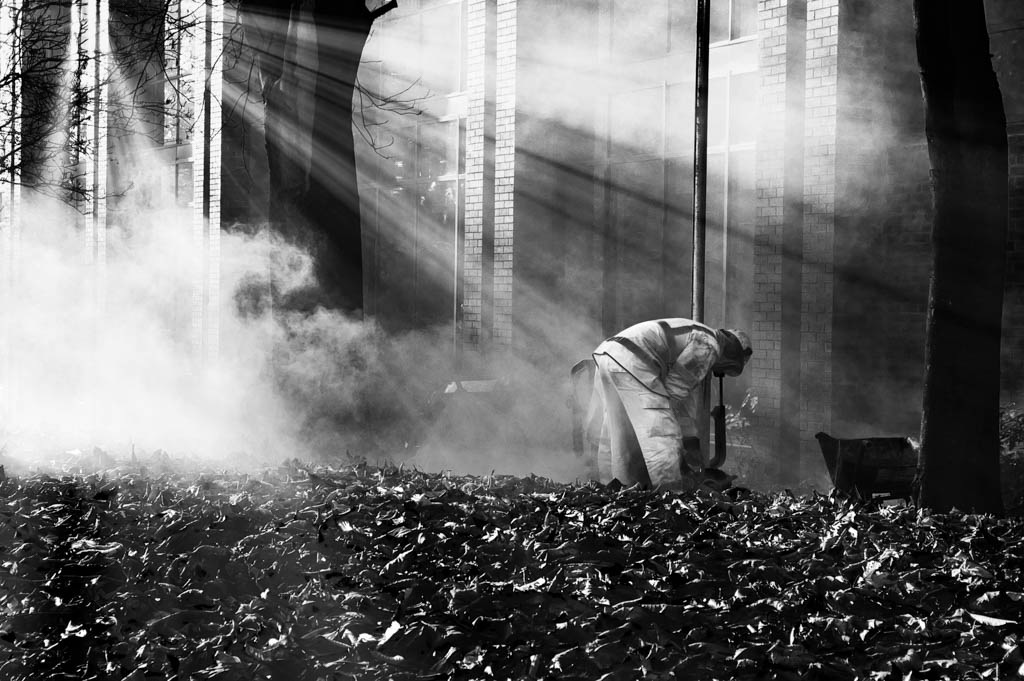
 Deer Buck Crags in Beautiful Nidderdale. North Yorkshire
 The Strid
This section of the river Wharfe in Yorkshire is known as ‘The Strid’. It has long been regarded as the most dangerous stretch of river in the world. It looks deceptively easy to jump across – it is only about 5 ft. wide, but if you slip you will die. No one who has fallen in, and there has been many, have lived to tell the tale.
Recent soundings have put the water depth at nearly 200 ft. and undercurrents will suck you down into the depths. I live about 5 miles from The Strid and often visit it – but I stay well away from the sides.
When I was at school we once went on a Geography Field Trip to The Strid. One of the boys jumped across. When the teacher discovered the boy on the other side of the river he went crazy, shouting and swearing at him. He told the boy to walk along the other side of the river for about half a mile downstream until there was a bridge and we would meet him there. A few minutes later the child joined us – he had jumped back across to our side and the teacher nearly had a heart attack! That was the end of all school trips the The Strid!
 Here are inscribed on these walls the names of the known Latvian dead from World War 2
 This is Whitby Abbey in North Yorkshire. It is here that Bram Stoker said that Count Dracula first landed in England. A fitting place indeed.

In the deep woods I came across a dark, deep lake that wasn’t on any map – and this ruined building next to it. I didn’t go in…
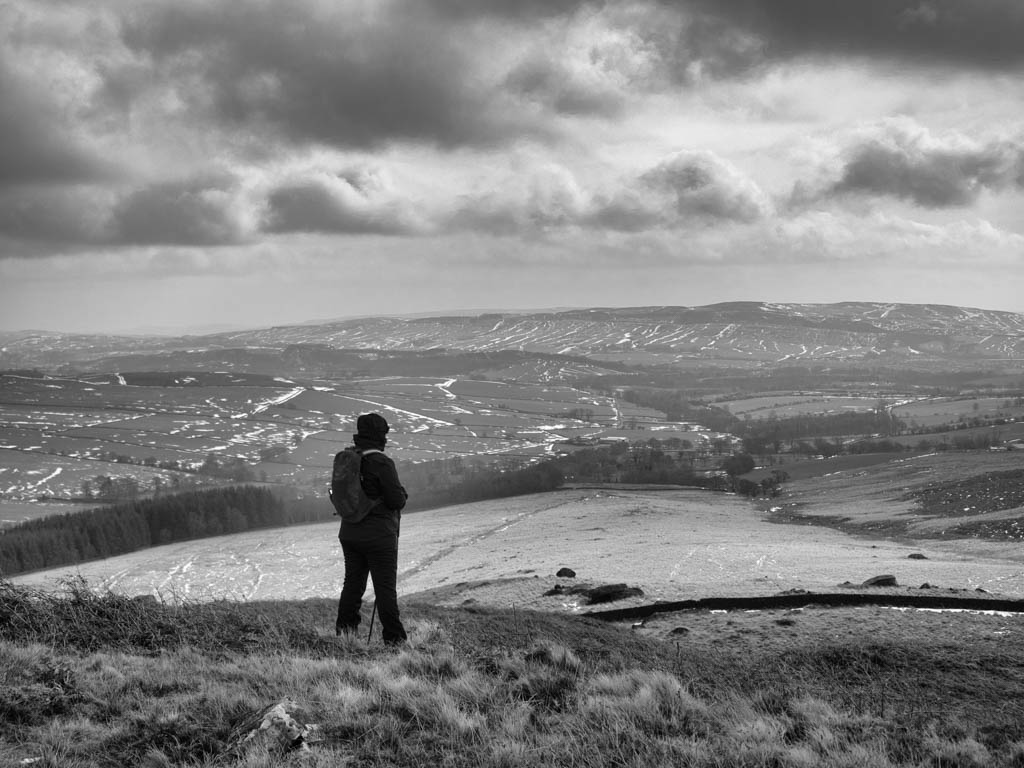
View over Ilkley moor in Yorkshire in the U.K.
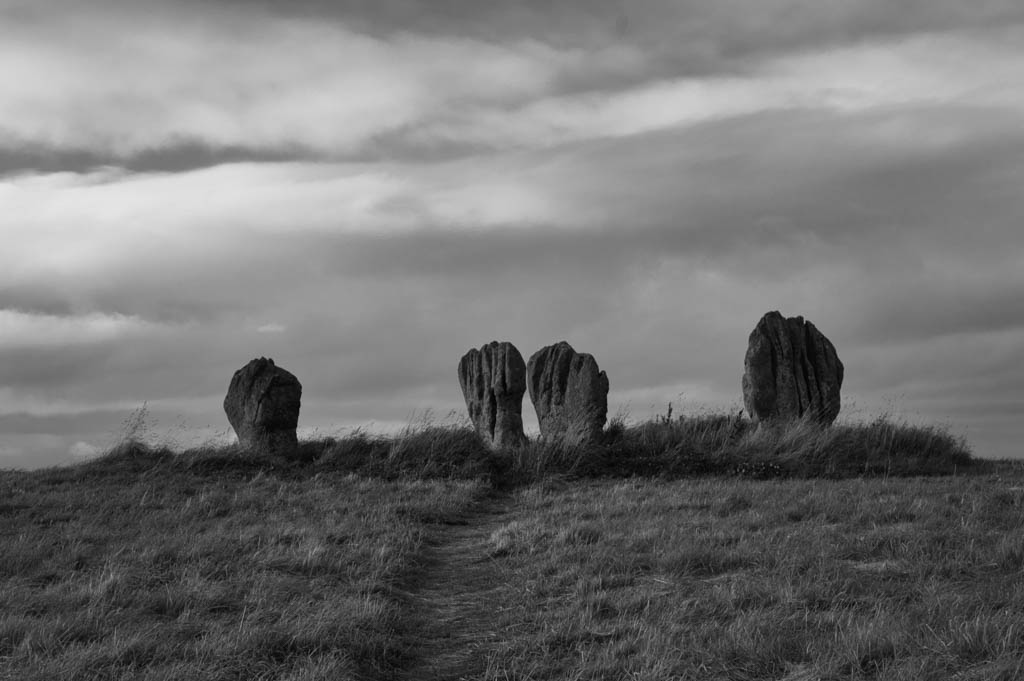 This is the 5000 year old Duddo stone circle in Northumberland in England. The fluted stones make a singing noise on windy days – hence the name – ‘The Singing Stones’…


You must be logged in to post a comment.